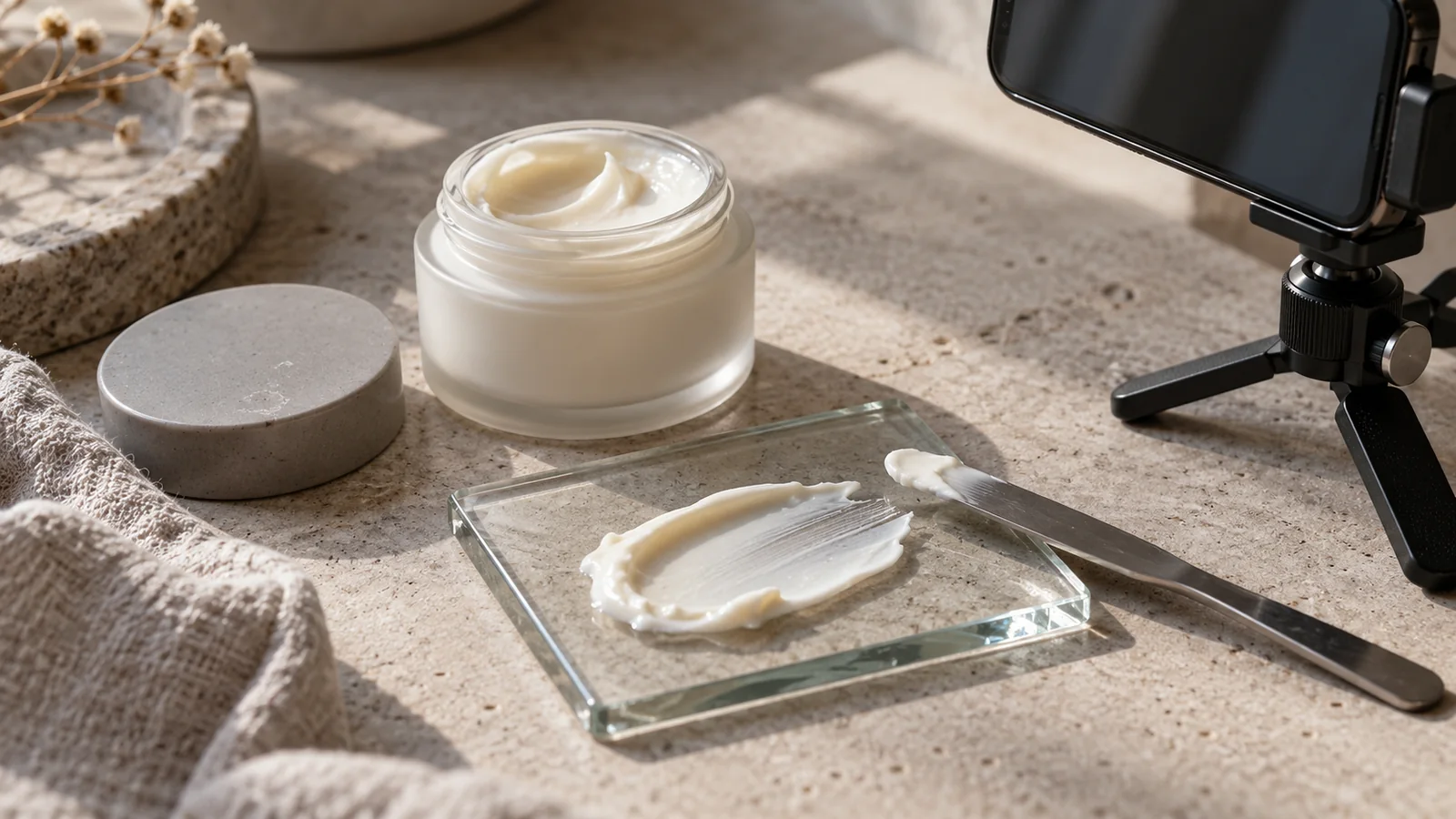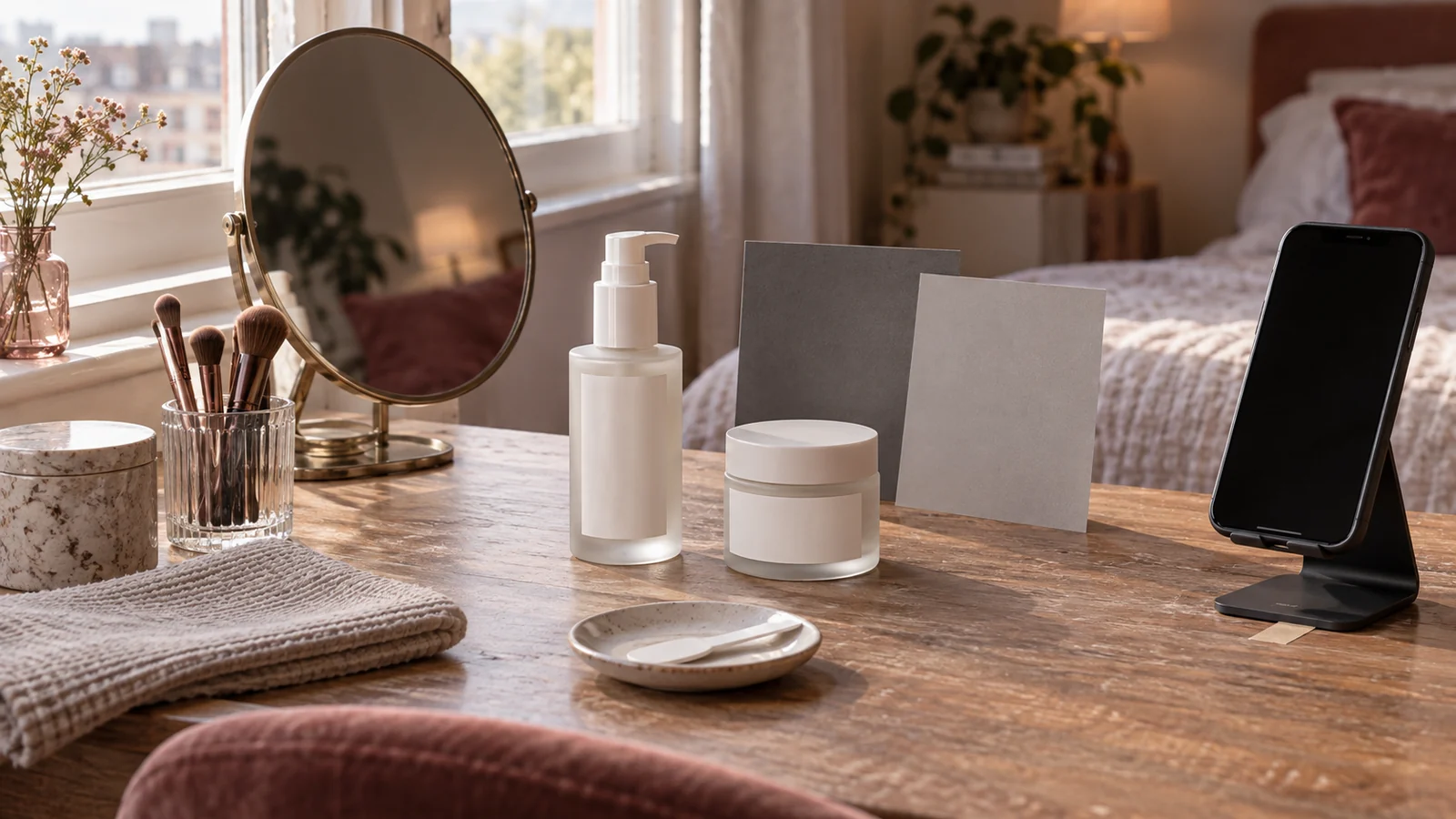
Beauty content is useful when it shows texture, shade, application and result under conditions viewers can understand. Production choices can easily turn into product claims: lighting, smoothing filters, grading and edits may make a comparison look stronger than it is. The creator's responsibility is to keep the evidence legible and the commercial relationship clear.
This is production guidance, not dermatological or medical advice. Do not make treatment, safety or outcome claims without appropriate qualified evidence and context.
Define the comparison honestly
Decide what the video actually demonstrates: application method, finish, shade behavior, wear observation, tool comparison or a personal routine. Write the constraint beside it. For example, “one application under the same window light” is a readable scope; “this fixes texture” is a claim that needs far more support.
Avoid hiding material variables such as primer, lighting, camera processing, time elapsed or added filter. If an edit changes the visual evidence, say so or do not use it for the comparison.
Build a repeatable shooting setup
Use a stable reference angle and comparable light for before/after or product comparisons. Capture:
- a wider orientation shot;
- a close texture or shade shot;
- the application action;
- a result view at a comparable distance;
- an optional unedited reference if it clarifies the conditions.
Check focus on the actual region of interest. A shallow depth-of-field effect can look polished while making the texture claim impossible to inspect.
Treat color as information
Set white balance deliberately and avoid changing it between comparison segments. Review the export on more than one screen when shade is central, and state that screen/display variation exists if viewers may make a buying decision from the clip.
Color correction can normalize exposure; it should not quietly alter the product result. Avoid exaggerated smoothing, blur or face-altering effects in a demonstration unless the content itself is about the effect.
Make application steps visible
Film the start, amount, tool, motion and result for the specific step being explained. Cut only after the viewer can see what changed. Use labels for sequence, shade and relevant tool, while voice explains the reason behind a choice.
Captions should be checked for product names and application terms. W3C guidance emphasizes that captions include meaningful speech and sound information; readable caption styling must not cover the product or face area the viewer needs to inspect.
Separate personal experience from factual claims
“This was comfortable for me in this lighting” is a personal observation. “This is safe for everyone” or “this treats a condition” is a different kind of claim. Keep language matched to the evidence and encourage viewers with specific concerns to use an appropriate professional source rather than a short video as diagnosis.
Maintain the same discipline for before-and-after presentations. Do not manipulate conditions to make a result appear stronger, and do not use a short clip to imply a duration you did not test.
Disclose commercial relationships clearly
The FTC's guidance says material connections should be disclosed clearly and conspicuously. Plan sponsorship, affiliate and gifted-product disclosures before shooting so caption layout and spoken language can accommodate them. Platform paid-partnership tools may be required in addition to disclosure language.
Do not let a brand brief dictate an unverified product claim. Preserve approval requests and final claim language with the project.
Edit and review for trust
Start with the visible question, show application or comparison proof, then provide a limited conclusion and next step. Use music and transitions only where they do not obscure the evidence. Keep a clean master without platform-only music.
Before publishing, check consent, accurate product identifiers, unfiltered/comparable evidence, captions, rights, disclosures and the final mobile playback. Archive original footage and notes so a correction or follow-up can show the same conditions.
Beauty production earns repeat trust when the visual style supports inspection rather than substituting for it.
After the voice and visual proof are protected, review the disclosed STIS music for beauty, grwm and skincare videos