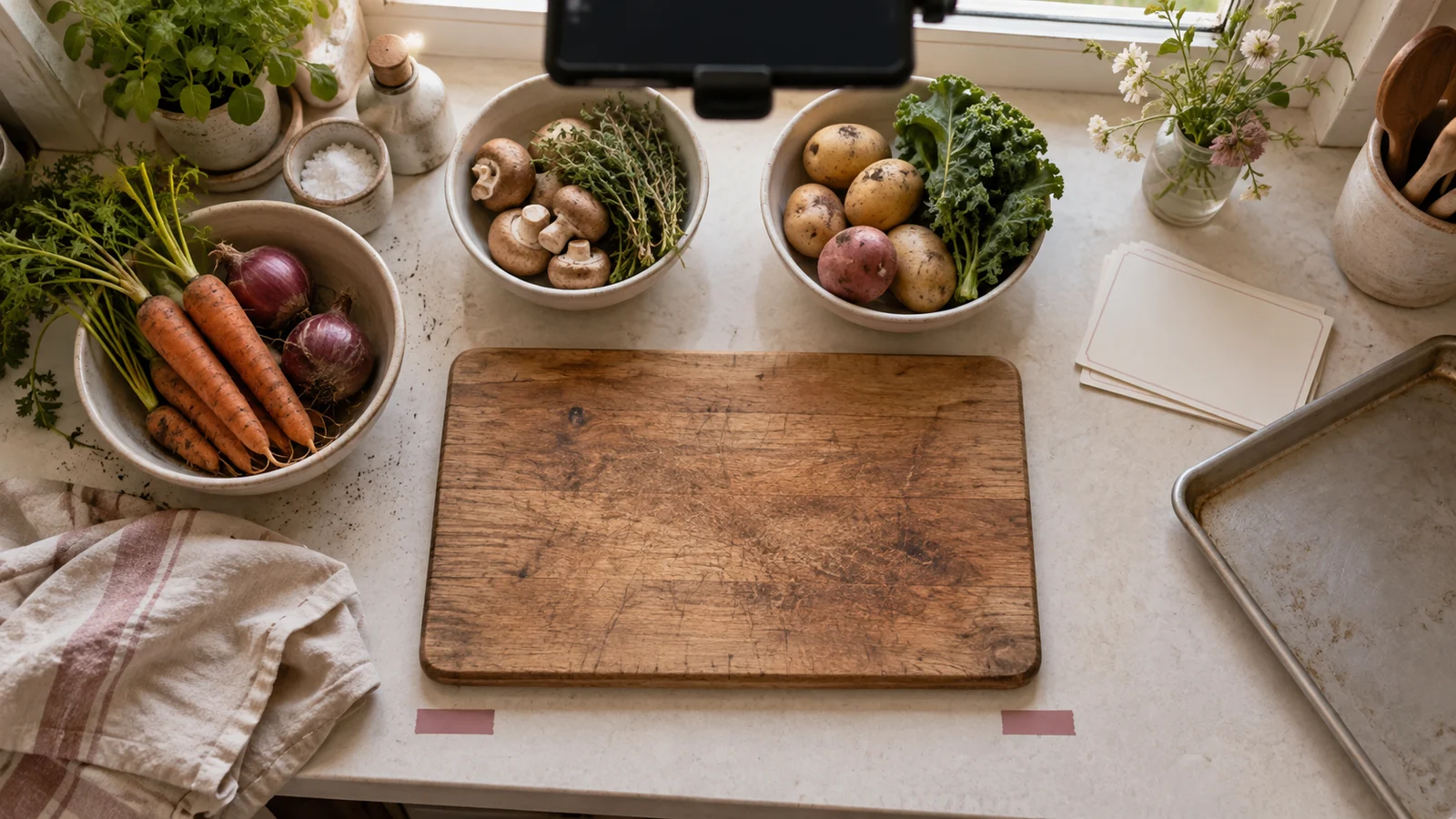
Useful food content makes a recipe, technique or ingredient decision easier to reproduce. The key evidence is often a state change: texture, color, thickness, timing cue or quantity. A beautiful montage can inspire, but a clear sequence earns trust.
This is production guidance, not food-safety or dietary advice. Verify local safety requirements and recipe claims with qualified sources where they are material.
Start with the viewer's cooking decision
Write one sentence: “A home cook can recognize when the sauce has reduced enough because the video compares three visible stages.” This creates a filming plan.
Choose one purpose: a full recipe, one technique, one substitution decision, one timing cue or a behind-the-scenes story. Do not combine unrelated recipes and product promotion unless the relationship is clear.
Plan irreversible moments
List events that cannot be recreated easily: opening a package, adding an ingredient, browning, boiling, slicing, plating or the first cut into a finished dish. Set cameras and lighting before those moments. Capture a stable reference angle for comparisons.
Record quantities, temperatures and times as production notes, then verify them before turning them into on-screen claims. If a variable changes the outcome—pan size, ingredient brand, heat source or altitude—mention it rather than presenting one result as universal.
Light for evidence
Use light that reveals texture and color without making the food look unlike the real result. Side light can show steam, gloss and surface texture; overhead light can make a process legible. Avoid changing white balance or saturation between before and after shots when the comparison is the evidence.
Film at least three scales: an orienting wide shot, a useful hand/action shot and a close detail when texture matters. Keep fingers, tools and bowls positioned so the relevant change stays visible.
Build an understandable sequence
Use a simple structure:
- finished result and actual promise;
- ingredients or constraints that matter;
- the key technique or sequence;
- visible completion cue;
- serving, storage or next step within the verified scope.
Avoid cutting away from the moment the viewer needs to learn. Decorative B-roll belongs between decisions, not over them.
Make text and sound carry different information
Use voice for why and judgment, on-screen text for quantities, steps and names, and visuals for state changes. Captions should reflect speech accurately, including meaningful sound cues such as a simmer or timer if they matter. W3C guidance treats captions and transcripts as planning work, not a decorative final layer.
Record clean cooking sounds where they demonstrate a state, but do not let loud music cover a warning or instruction. Keep any music license record with the project.
Handle sponsorships and products honestly
If a brand pays, gifts or otherwise influences the content, disclose the relationship clearly and use required platform tools. The FTC says disclosures should be clear and conspicuous; viewers should not need to open a description or infer a relationship from a hashtag.
Do not make unverified nutritional, medical, allergy or safety claims to improve conversion. If a product is central, show its actual role in the recipe and explain limits such as alternatives or measurement differences.
Review for reproducibility
Before publishing, ask a person who did not cook the recipe to identify the main step, cue and ingredient quantity. If they cannot, add a shot or text rather than more transitions. Check crop, caption legibility, timing, commercial disclosure and the final file after platform processing.
Archive recipe notes, originals, clean master, ingredient/product records, licenses and approved caption. This makes seasonal updates, corrections and vertical/horizontal adaptations far less expensive.
The practical food-content system is simple: show the real decision, preserve the irreversible evidence, make the state change visible and state the scope honestly.
Once the recipe or technique remains clear, creators can review the disclosed STIS music for food and cooking videos