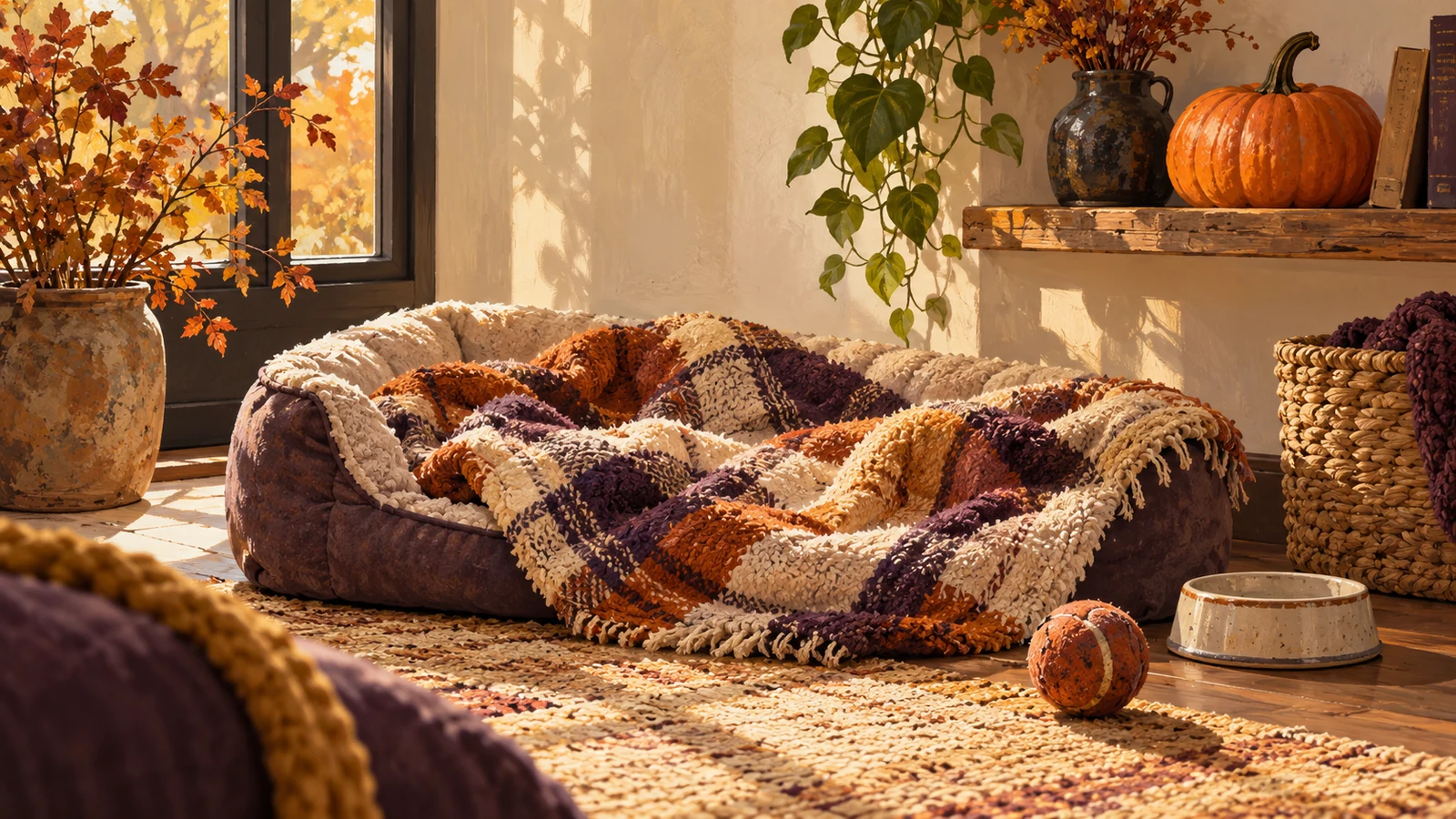
A Halloween pet video can come from the season around an animal rather than an action you demand from it. Film a familiar resting place, an ordinary walk or the quiet routine before visitors arrive. Add seasonal context through the human environment and the edit, while the pet remains free to behave normally.
The strongest boundary is simple: the shot is optional. If the animal avoids the set, moves away or seems uncomfortable, end the attempt. This article suggests observational production ideas; it does not diagnose behavior or replace advice from a veterinarian who knows the animal.
Build the season outside the pet's space
Place a small Halloween object in a background the pet cannot reach, or film the decoration separately and cut to a normal pet moment. You do not need a hat, cape or staged scare to connect the footage to October.
Choose the pet's familiar room and preserve normal access to water, rest and an exit from the filming area. Keep the camera far enough away that you do not repeatedly reposition the animal. A longer lens or a wider stationary frame can help you observe without turning the shoot into a demand for attention.
Use ordinary room light. Avoid sudden flashes, moving lights or noises introduced to provoke a reaction. If the shot is visually plain, improve framing or film a separate seasonal detail rather than adding stimulation directed at the pet.
Choose a story that fits routine
Three useful formats are a quiet afternoon, a familiar pre-walk preparation and a comfortable room before trick-or-treating. None requires a trick. The story can simply show how the household maintains an ordinary routine during a busy seasonal evening.
| Story | Footage to observe | Seasonal connection | Stop condition |
|---|---|---|---|
| Quiet afternoon | Resting, stretching or looking outside | Separate view of autumn light or decor | The animal moves away from the camera |
| Familiar walk | Normal preparation and a usual route | Seasonal colors along the route | Crowds or noise change the animal's comfort |
| Calm evening setup | A familiar bed or resting area | Human preparation away from the pet | Filming interferes with settling down |
| Household routine | Ordinary play already happening | A short establishing shot of the room | Interaction becomes forced or repetitive |
The stop conditions are conservative production choices. Do not interpret them as a complete list of animal stress signals, which vary by species and individual.
Keep Halloween hazards out of frame and reach
The ASPCA's Halloween safety guidance highlights risks from chocolate, xylitol-containing treats, wires, flames and small costume pieces. Keep those materials out of the animal's accessible environment, including when arranging a background.
Do not put food intended for people near the pet merely to establish a Halloween theme. A sealed package can still attract attention and be chewed. Film the candy bowl separately in a pet-free area. Use an appropriate familiar pet item only when it belongs to the animal's normal routine.
When visitors arrive frequently, a comfortable space away from the front door can be more appropriate than a filming spot near the activity. The ASPCA recommends such separation for many pets during busy trick-or-treating periods. Prioritize the real household arrangement rather than bringing the animal to the door for a seasonal shot.
If you suspect ingestion of something toxic, stop production and contact a veterinarian or the appropriate animal poison service. Do not keep filming symptoms or attempt a remedy based on a content idea.
Observe once instead of repeating a moment
Start the camera before an ordinary activity and let the scene unfold. A yawn, stretch or curious glance may make a complete sequence when paired with a separate shot of the room. If you miss it, use a different real moment instead of trying to recreate the behavior through pressure or surprise.
Keep sessions brief enough that filming does not displace care or rest. Record the environment and human preparations afterward. This gives you editing material without extending the pet's participation.
Do not edit unrelated clips into a false reaction. A pet looking up on another day should not become “terrified by the ghost decoration” through a misleading sound effect. You can create a clearly fictional comic edit, but label the framing so viewers are not encouraged to repeat a supposed interaction.
Let sound describe rather than provoke
Record calm natural sound when practical. Add any seasonal soundtrack in the edit, without playing it loudly to produce a response during filming. A quiet version with no music may be more faithful to the story.
Avoid adding screams or startled-reaction effects to imply distress that did not occur. If the video includes a spoken explanation, keep it accurate and captioned. An observational Halloween video works because it shows a familiar animal within a changing human season, not because it manufactures fear.
Check the published story against reality
Watch the edit without its caption and ask what behavior it appears to show. Then compare that impression with your actual filming notes. Correct any misleading connection before release.
Finish with a small true moment and practical context: the usual walk, the comfortable room or the undisturbed afternoon. The seasonal character can live in the setting while the animal retains its normal choices and routine.
Before any new pet filming format, review the pet content safety checklist against the real animal and location.