An exercise demonstration should let a viewer identify the setup, the complete movement and the stated boundary of the instruction. Cinematic variety is secondary. If an edit hides the start position, reverses chronology or implies a health result that was never demonstrated, the video is not clear even when it looks polished.
Plan the demonstration with the qualified coach or subject-matter owner. The camera operator can make movement visible; they should not invent individualized exercise advice.
Define the exact teaching claim
Write one sentence describing what the video will show. Keep it observable:
- “This angle shows how the band is anchored before the row begins.”
- “The sequence distinguishes the start and end positions of this mobility drill.”
- “The demonstration shows the equipment adjustment used by the instructor for this session.”
Avoid a brief such as “show perfect form.” It is too broad, implies a universal prescription and gives the camera no specific evidence to capture. Name the joint, object, direction, phase or safety condition that must remain visible.
Also define what the video will not establish. A short demonstration does not diagnose pain, guarantee injury prevention or prove a performance outcome. Put referral or stop language in the script when the responsible expert says it is needed; do not add medical instructions during editing.
Build a five-part evidence sequence
A useful demonstration usually needs five kinds of information:
| Part | Viewer question | Required evidence |
|---|---|---|
| Context | What exercise or variation is this? | precise name and intended scope |
| Setup | Where do body and equipment begin? | stable full setup before movement |
| Action | What path does the relevant part follow? | one uninterrupted representative repetition |
| End state | Where does the movement finish or reset? | held position or clearly visible return |
| Boundary | When does this explanation not apply? | named limitation, modification owner or stop instruction |
Capture the uninterrupted repetition before collecting close-ups. The wide or teaching angle is the reference; inserts should clarify it, not replace it.
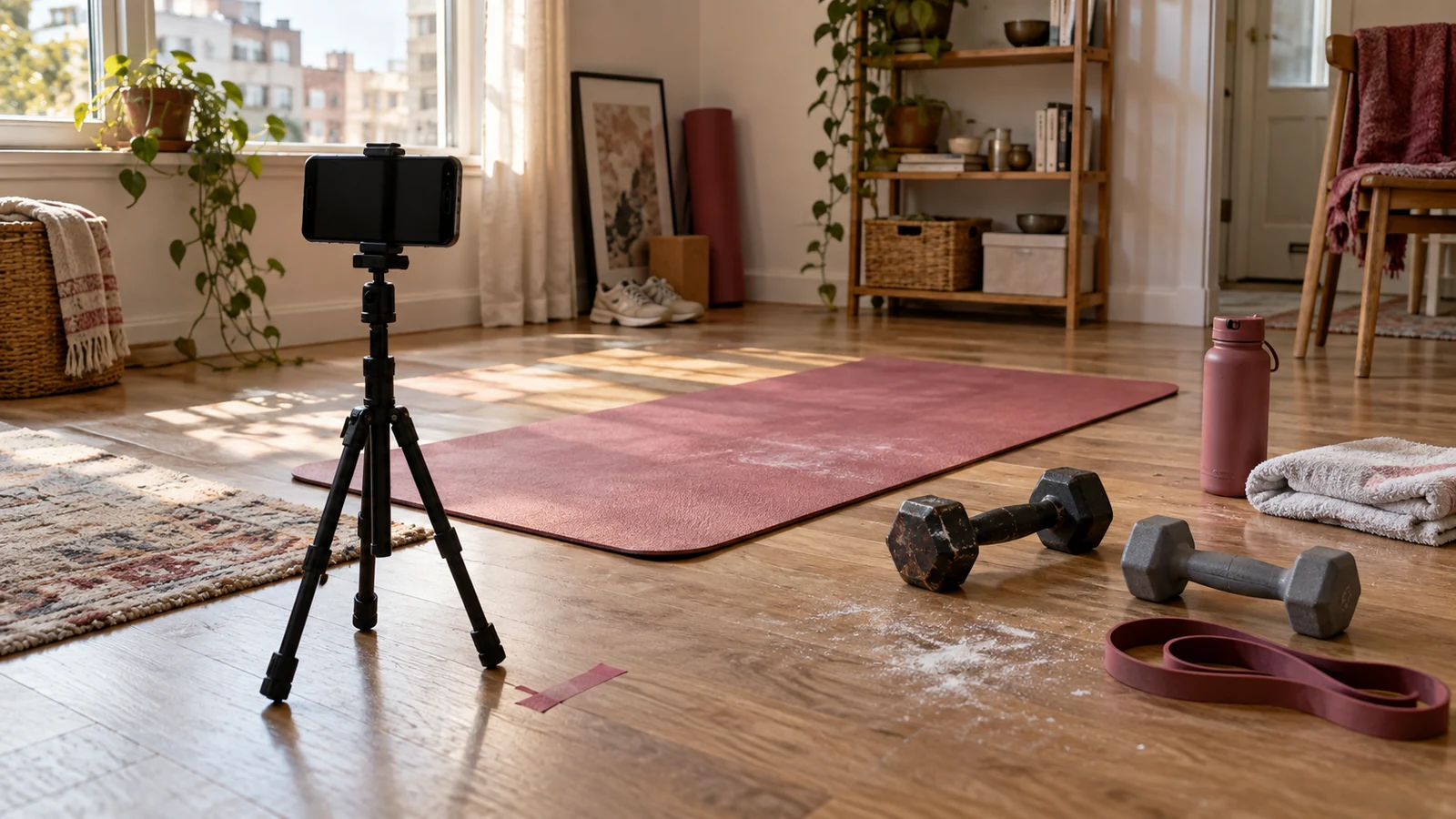
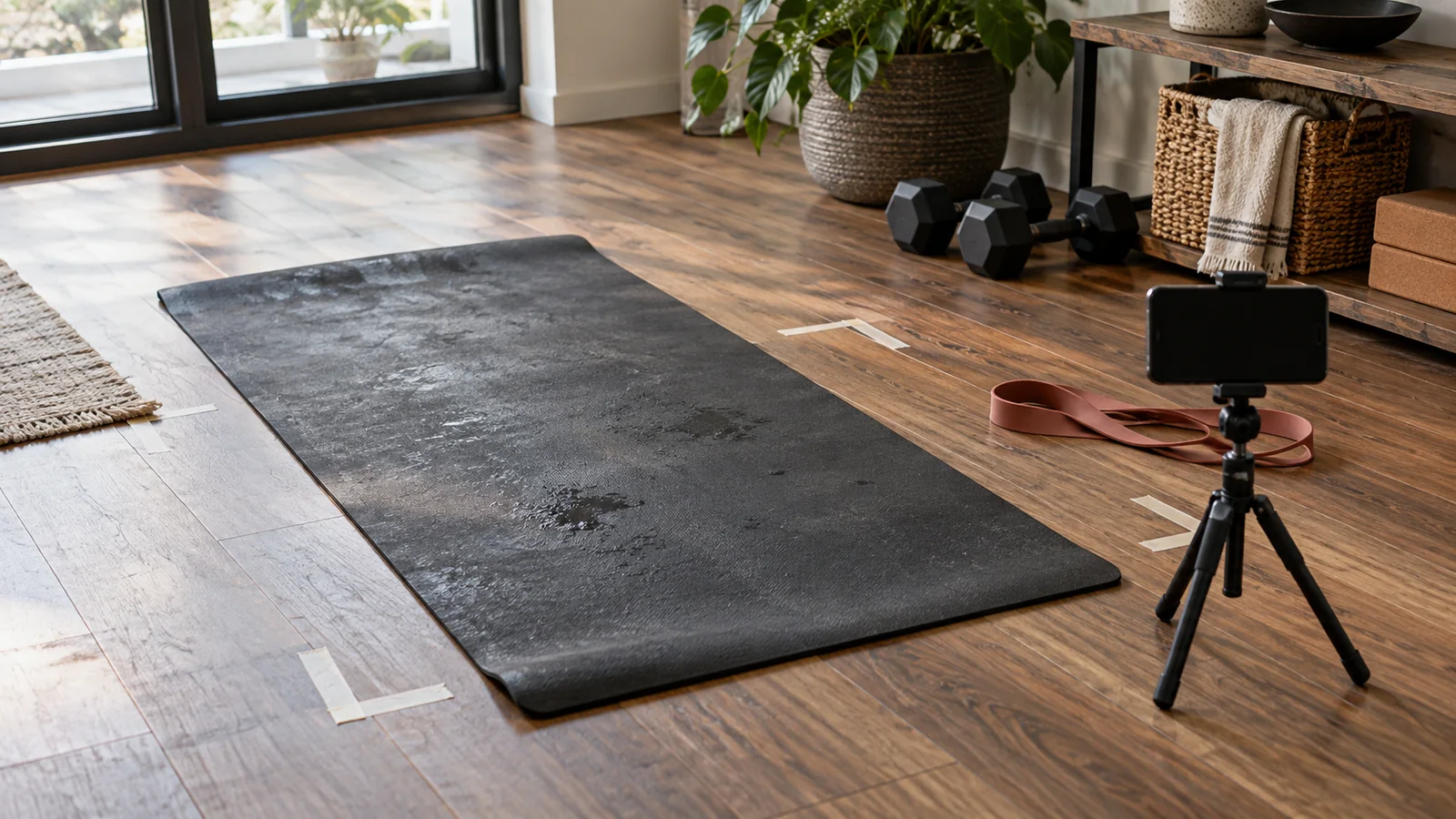
For equipment setup, record labels, adjustment points and connection state before the person begins. For floor movement, ensure the frame includes the contact points that the explanation names. For a standing exercise, avoid cropping feet when stance is part of the instruction.
Choose an angle by the question it answers
Camera position should reveal the relevant plane and reference points. A front view may show left-right symmetry but hide forward travel. A side view may show depth while obscuring hand spacing. An oblique view can provide context but make precise alignment harder to judge.
Use one primary teaching angle and add a second only when it answers a different question. Label angle changes when viewers might mistake two separate repetitions for one continuous action. Keep lens distortion modest and the camera level stable; an extreme wide angle near the subject can exaggerate distances.
Test the frame with the full range of motion and the actual equipment. Do not compose around the start pose and discover during the working set that a hand, weight or foot leaves the image.
Protect the movement area before recording
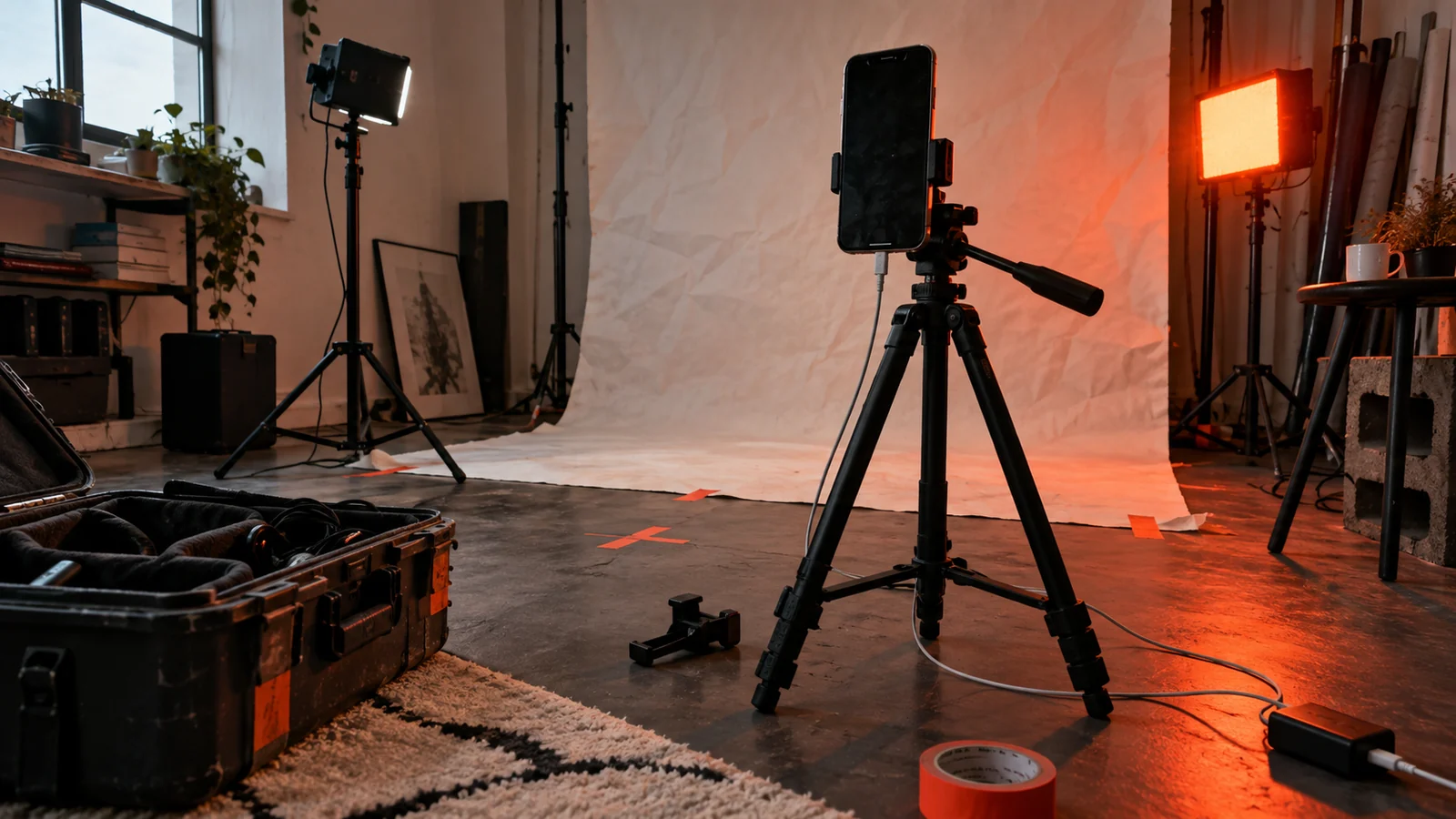
Map active paths, equipment travel, dropped-weight zones, cables, stands and crew positions. OSHA workplace material is not a fitness instruction standard, but its basic hazard-control guidance is directly relevant to a set: walkways should be clear of trip hazards, and cables or cords should be removed from paths or suitably covered.
Agree on stop authority before filming. Recording stops when the participant withdraws consent, the coach identifies a problem, equipment or crew enters the path, or fatigue makes another take inappropriate. Do not request repeated strenuous sets merely to obtain more angles. Capture setup details before the working effort and schedule low-load pickups only with the responsible coach’s approval.
If the creator is filming alone, lock the camera and start recording without rushing through an active area. Never place a phone, light or stand on unstable equipment.
Make one truthful repetition the anchor
Show the start, complete action and reset at a speed that preserves the information being taught. Do not assemble one apparent repetition from incompatible takes unless the edit clearly marks the change and the responsible expert has verified the result.
Slow motion can clarify timing but should be labeled when it changes apparent pace. Speed ramps, reversed footage and beat-driven cuts are poor choices for technique evidence unless the video separately provides an unaltered view. Repetition counters and range markers must match what is actually visible.
When showing a common error, do not ask a participant to perform a hazardous version for drama. Use a qualified demonstrator, a controlled illustration, a paused comparison or another method approved by the subject-matter owner.
Write narration that can stand without vague pointing
Replace phrases such as “move like this” or “put it here” with nouns and reference points the viewer can identify. W3C media guidance recommends making information work for people who cannot see or hear and gives integrated description as a useful approach for instructional video. The speaker can describe the relevant visual information in the main narration instead of relying only on a separate track.
For example, “Attach the band here” becomes “Attach the band to the low anchor beside the left foot.” The exact wording must still be approved by the qualified instructor; accessibility is not permission for an editor to create technical guidance.
Provide synchronized captions for speech and meaningful sound. Do not place essential safety text for only a few frames. Use readable contrast, sufficient display time and wording that matches the final narration. If music is present, keep it below coaching, timers and warnings.
Separate demonstration from outcome marketing
A clear depiction of movement is not proof of a health or performance result. The FTC’s health-products guidance explains that objective health claims, including implied claims created by context and imagery, need appropriate substantiation. This matters when a demonstration is paired with before-and-after footage, a product promotion or a testimonial.
Review the complete edit for messages it may imply:
- Does a cut suggest immediate pain relief?
- Does a transformation image imply a typical result without evidence?
- Does product placement suggest that equipment caused the demonstrated performance?
- Does music and sequencing turn one participant’s experience into a general promise?
If the evidence supports only the visible setup or movement, say only that. A disclaimer cannot rescue an edit whose dominant message makes a stronger claim.
Conduct two independent reviews
The subject-matter review and production review answer different questions.
Qualified-instruction review: The responsible coach or expert verifies the exercise name, sequence, visible technique, modifications, limitations and stop language. They confirm that the edit did not create an impossible or unsafe composite.
Editorial-production review: The editor verifies continuity, labels, captions, readable text, audio clarity, permissions, consent and claim scope. They confirm that every close-up corresponds to the correct variation and take.
Use a reviewer who did not attend the shoot for a comprehension test. Ask them to identify the setup, describe the movement order and state the limitation. If they must infer a hidden foot position or guess which repetition an insert belongs to, capture or restore the missing evidence.
Demonstration release checklist
Release the video only when:
- the teaching claim is narrow and observable;
- setup, complete action and end state are visible;
- camera angles answer named questions;
- the movement path and set remain free of production hazards;
- no edit fabricates a continuous repetition or unsupported outcome;
- captions and spoken or textual alternatives carry essential information;
- a qualified owner approved technical instruction and stop language;
- consent, location, music and third-party rights are recorded.
The strongest exercise demonstration is not the one with the most angles. It is the one in which every shot reduces uncertainty about the movement while leaving safety and individualized advice with the appropriate professional.
Related resources
Sources
- W3C WAI — Audio Content and Video Content
- W3C WAI — Description of Visual Information
- OSHA — Supervising for Safety training manual
- FTC — Health Products Compliance Guidance
OSHA guidance is used only for general set hazard control, not exercise technique. The evidence sequence and review model are Nicheframe editorial synthesis. This article is production guidance, not medical or individualized exercise advice. Sources reviewed 14 September 2026.