A workout should remain a workout, not become a film set with exercise happening around it. The safest production plan captures the evidence viewers need while protecting movement space, rest periods, concentration and the participant’s right to stop.
Plan positions before the session, keep equipment outside active paths and use short pickups for missing visuals instead of asking someone to repeat fatiguing sets for coverage.
Define what the video must teach or show
Choose one primary purpose:
- demonstrate the sequence of a routine;
- show the setup and execution of one movement;
- document the atmosphere of a real session;
- compare equipment or exercise variations;
- tell a progress story without making an unsupported outcome claim.
Each purpose needs different evidence. A technique demonstration needs an angle that shows the relevant start position and movement path. An atmosphere piece can use closer details, but those details should not pretend to teach form.
Write the shot list around the viewer’s question. More angles are not automatically more useful.
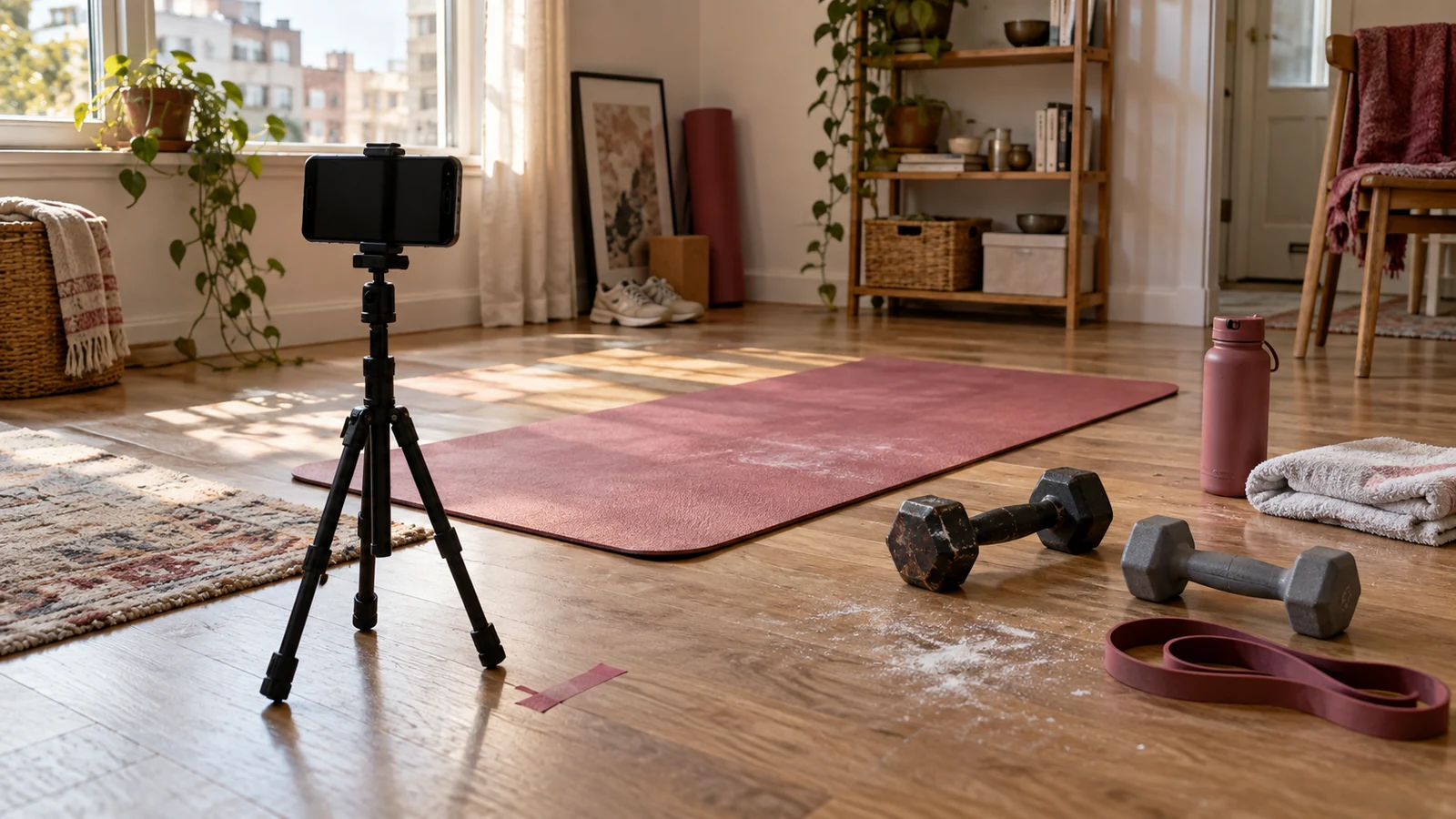
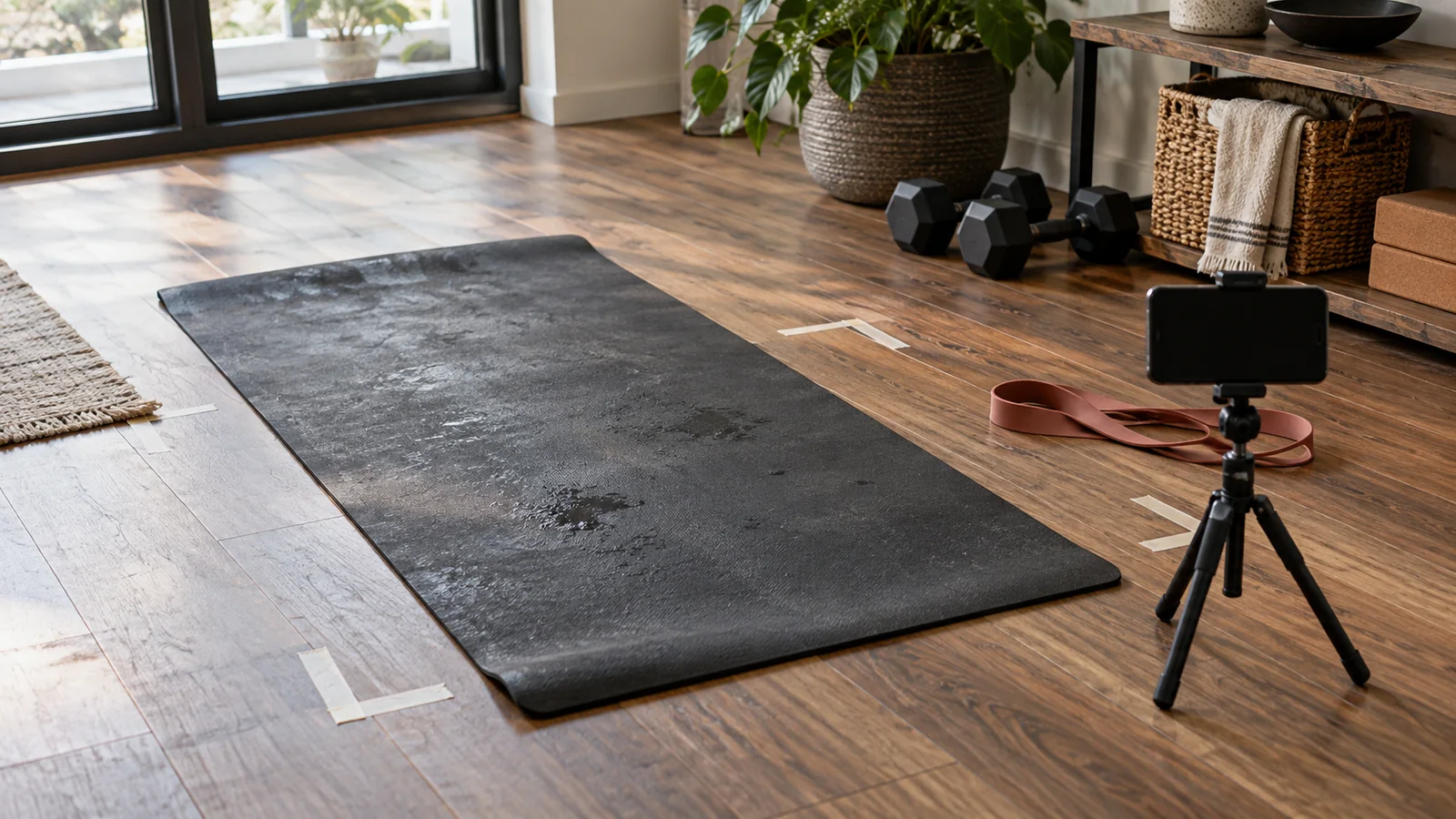
Map the training area before placing a camera
Walk through the complete session with the athlete or coach. Mark:
- movement and equipment paths;
- loaded weights and places where equipment may be dropped;
- walking routes and emergency access;
- mirrors, other participants and private information;
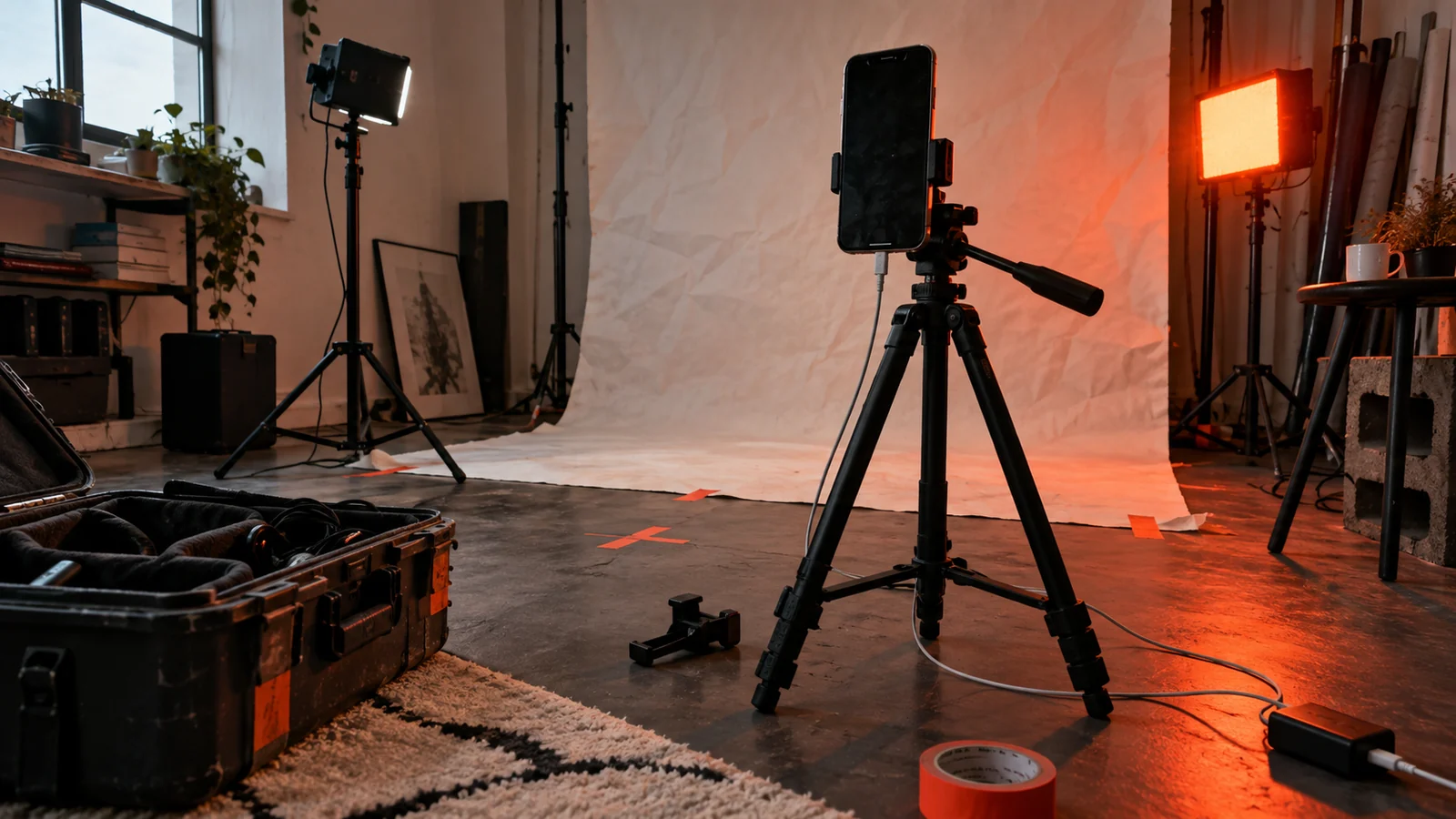
- power cables, stands and bags;
- camera positions that do not require anyone to step around the setup.
OSHA walking-surface guidance is written for workplaces, not creator workouts, but its basic hazard-control principle is directly useful: keep floors and passageways clear and remove trip hazards. A cable crossing the athlete’s route is not justified by a better angle.
Use battery power when practical. If a cable is unavoidable, route and secure it outside the movement area. Do not balance a phone on loose weights, benches in use or unstable gym equipment.
Choose a minimum useful shot plan
For one exercise, the following coverage is often enough:
| Shot | Purpose | Capture timing |
|---|---|---|
| Wide setup | shows body, equipment and available space | first normal working set |
| Technique angle | reveals the movement path relevant to the explanation | one representative set agreed with the coach |
| Detail | shows grip, adjustment or equipment state | before or after the working set |
| Context cutaway | identifies timer, load label or station | during rest without blocking recovery |
| End state | confirms completion or equipment reset | after the exercise |
Do not capture the same hard set five times merely to obtain cinematic variety. Get low-effort details before the session, use the real working set for the essential movement, and collect non-fatiguing pickups afterward.
Agree on stop rules before recording
The participant, coach and camera operator should know that recording stops when:
- the participant withdraws consent or asks for space;
- a coach identifies a safety or technique problem;
- equipment or crew enters an active path;
- fatigue makes another repetition inappropriate;
- another person enters frame without suitable permission;
- the filming goal conflicts with the planned session.
The camera operator should not coach beyond their qualifications. If an exercise requires individualized instruction, the relevant qualified person owns that decision.
Protect rest, cues and concentration
Do not fill rest periods automatically with retakes, interviews and equipment adjustments. Ask in advance when questions can be recorded. Keep verbal cues audible and avoid music playback that masks coaching, timers or environmental warnings.
If the creator is both athlete and camera operator, lock the frame before loading equipment. Start recording from a position that does not require rushing across the room. A remote trigger can reduce unnecessary movement, but it must not become another object in the exercise path.
Make technique visible without making promises
Use stable framing, consistent speed and enough duration to see the start and finish positions. Avoid a crop that hides the part of the body discussed. Slow motion can reveal timing, but label it when it changes the apparent pace of the exercise.
Separate observation from prescription. “This angle shows the knee and foot throughout the movement” describes the video. “This variation prevents injury” is a health claim that requires appropriate evidence and expertise. The FTC’s health-products guidance emphasizes that objective health-related claims need adequate substantiation; a dramatic before-and-after edit is not substantiation.
Record useful sound and an accessible explanation
Capture clean speech separately if the room is too noisy for reliable instruction. Record a short ambience track and useful natural sounds only when they do not interrupt the session. Keep music replaceable for platform and licensing changes.
Provide captions for meaningful speech and make essential visual instruction available in text or narration. W3C’s media-accessibility guidance treats captions, transcripts and descriptions as distinct tools; choose the alternative that carries the information actually needed.
Handle privacy before publication
Check mirrors and wide shots for bystanders, screens, member lists, vehicle plates, access codes and location clues. Obtain permission before featuring identifiable people. If permission is uncertain, reframe or remove the material rather than relying on a blur added at the last minute.
Keep consent and location approval with the project record. Do not publish private health information simply because it was mentioned while cameras were rolling.
Session-first release checklist
Before filming:
- purpose and essential shots are agreed;
- camera positions and movement paths are mapped;
- consent, location rules and stop authority are clear;
- cables, stands and bags remain outside active routes;
- the coach owns technique and safety decisions;
- pickups are scheduled around, not inside, necessary recovery.
Before publishing:
- framing communicates what the caption claims;
- no unsafe setup is normalized by the edit;
- health or performance claims have appropriate evidence;
- captions and audio alternatives are complete;
- bystanders and private information are cleared;
- music and location permissions are documented.
The best workout footage looks intentional because the production understood the session. It does not need to manufacture intensity by creating extra risk or extra repetitions.
Related resources
Sources
- OSHA — Slips, Trips and Falls: keeping passageways clear
- FTC — Health Products Compliance Guidance
- W3C WAI — Making Audio and Video Media Accessible
Quality Checklist