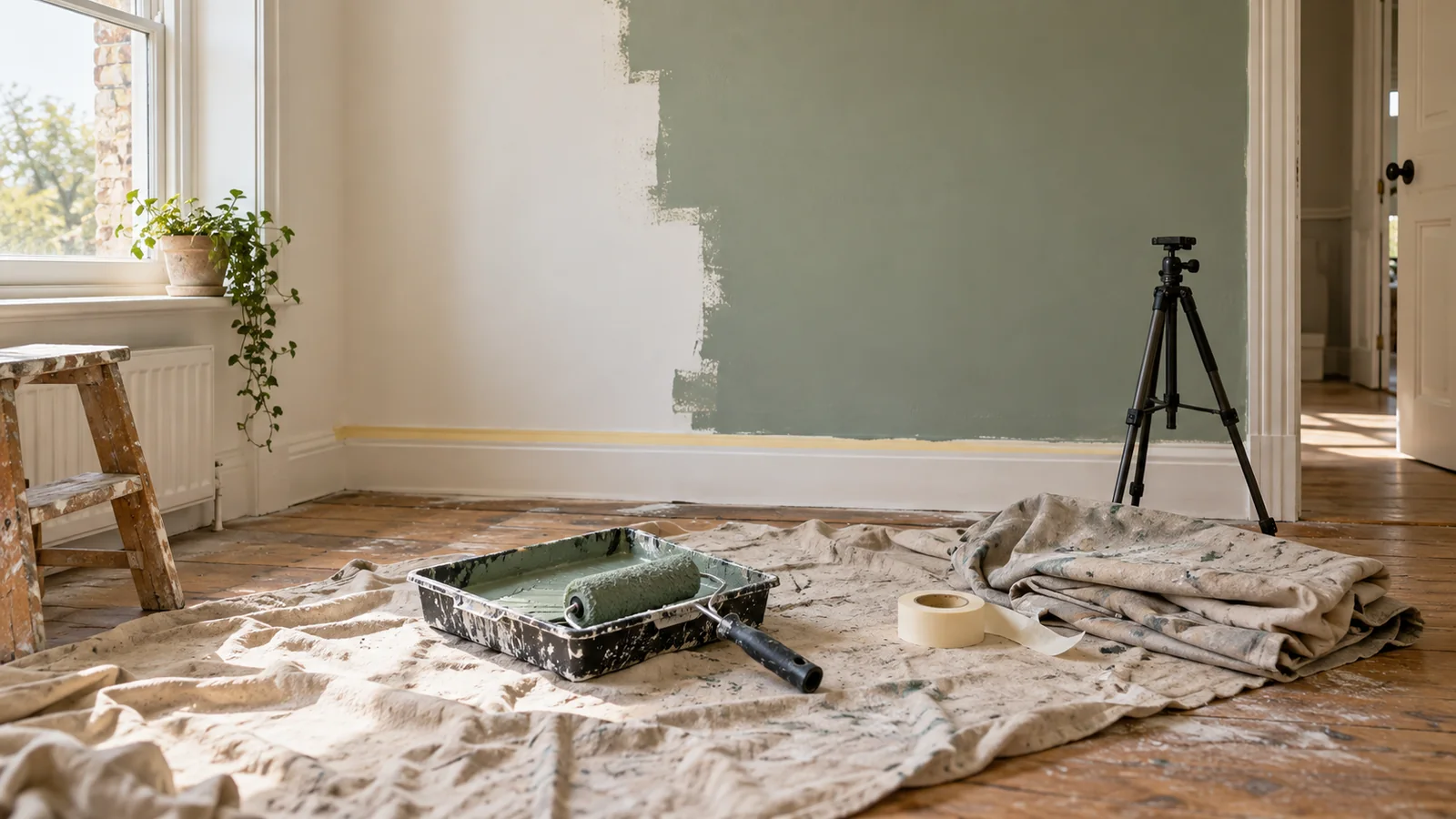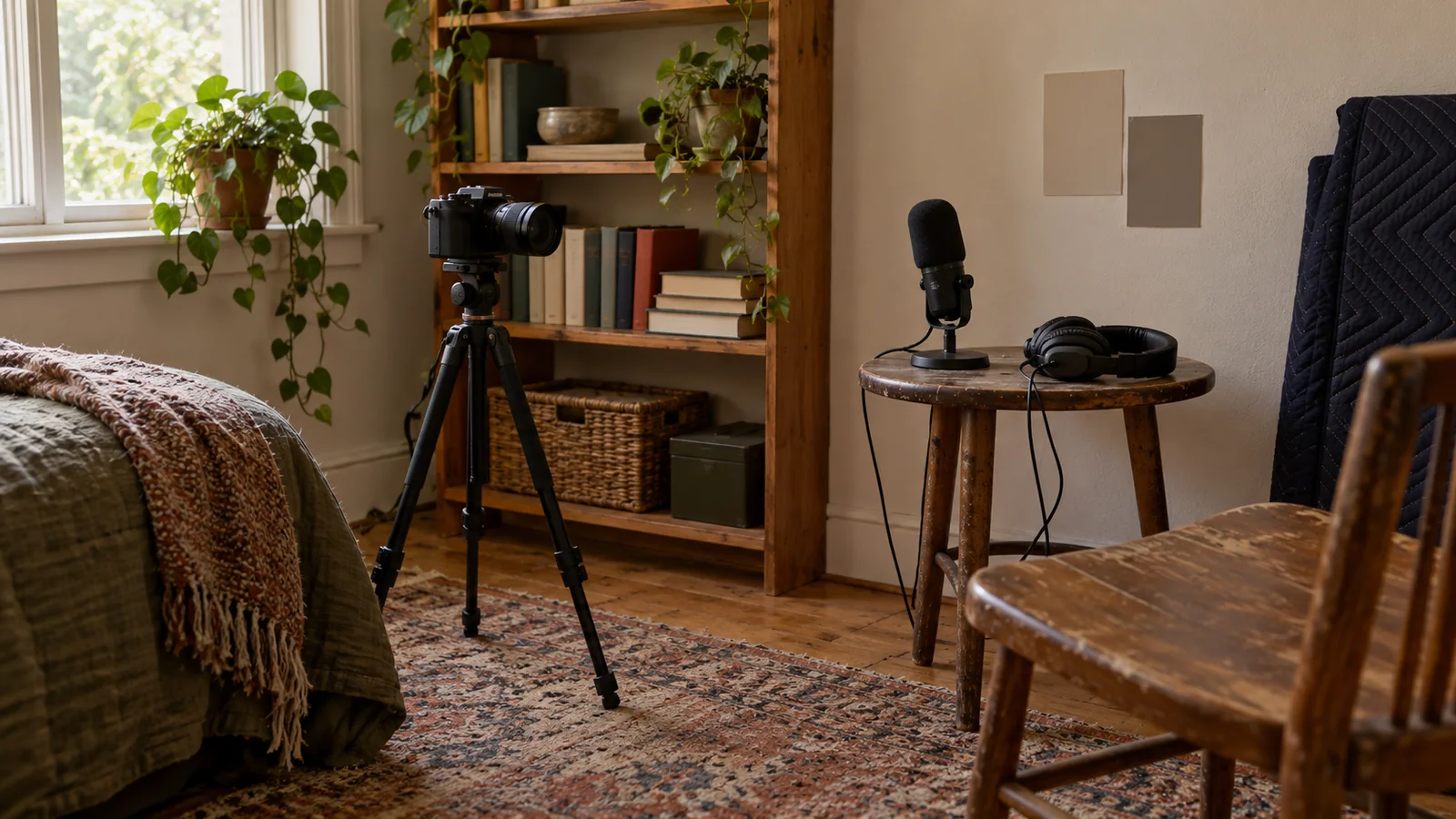
Home content is most useful when it documents constraints, process and result from comparable reference points. A reveal can be satisfying, but viewers learn more when they can see what changed, why it changed and what part of the process remains specific to that home.
This is production guidance, not construction, electrical, plumbing or safety advice. Do not present a video as a substitute for qualified assessment or local code requirements.
Choose a bounded project question
Define one problem: improve storage around a doorway, compare two paint samples under the same light, organize a work surface, document a non-structural refresh or explain the planning sequence of a renovation. State limitations such as rental restrictions, tools, budget, building age or contractor involvement.
Avoid combining a visual makeover with a universal instruction. A result in one room may depend on materials, wiring, moisture, structure or local rules that are invisible in a short edit.
Establish fixed reference angles
Before changing anything, capture wide, mid and detail views from marked positions. Return to those positions after each significant stage. Consistent angle, focal length and lighting make progress legible and reduce the temptation to exaggerate with a more flattering final frame.
Record measurements, materials and decisions separately from the edit. Check names and quantities before using them as on-screen instructions.
Document the process, not just the reveal
Use a clear sequence:
- original constraint;
- desired functional change;
- planning or preparation;
- a few representative work stages;
- result from comparable reference views;
- what remains context-specific or requires a specialist.
Show the irreversible or difficult steps with enough time to understand them. Do not compress a hazardous operation into a stylish montage that suggests it is trivial.
Make overlays serve the work
Use text for dimensions, material names, stage labels and scope limitations. Use voice for why a choice was made. Keep captions accurate and ensure overlays do not cover the edge, joint or detail being discussed. W3C media guidance supports planning captions and visual descriptions as part of production, not after the video is locked.
Sound can prove an action, but music should not cover safety context or important tool noise. Keep audio and visual records for later corrections.
Handle product and brand relationships honestly
Gifted fixtures, affiliate links, sponsored tools and contractor relationships can influence recommendations. Disclose them clearly and conspicuously, including in a format the viewer sees with the actual recommendation. The FTC's disclosure guidance is relevant for U.S.-directed creator content, and local rules may add obligations.
Do not make performance, safety or savings promises just because a brand supplied the item. Keep the claim matched to what you actually observed and the conditions shown.
Use a scope-and-stop checklist
Before filming a process, write the work you can document safely and the point at which the video must stop and refer to a qualified person. Examples include uncertainty about structural changes, electrical connections, gas, water damage, mold, hazardous materials or local permissions. This is not a disclaimer pasted at the end; it determines which shots and instructions belong in the story.
For every product or material shown, retain the exact name, variant, date and relevant instructions supplied by its maker. If the viewer could mistake a decorative result for a durability, energy, safety or cost claim, show the limit on screen or avoid the implication. Accurate constraints give a small project more credibility than a dramatic, incomplete shortcut.
Edit and archive for follow-up
Open with the function problem, show the constraint and process evidence, then deliver the result without implying that it applies identically everywhere. Keep before-and-after color and light comparable. Test mobile crop and captions.
Archive original footage, project notes, material records, sponsor disclosures, clean master and final export. A later maintenance update or correction will be more credible if you can return to the actual baseline.
Home content earns trust when it makes both progress and limits visible. The best reveal is one a viewer can interpret without being asked to ignore the conditions behind it.
Once the transformation remains honest, review the disclosed STIS music for home, interior and cleaning videos
Download the project worksheet
Record fixed reference points and comparable lighting, then capture the constraint, process and result. Use the sheet as a filming plan; it does not replace trade or safety advice.