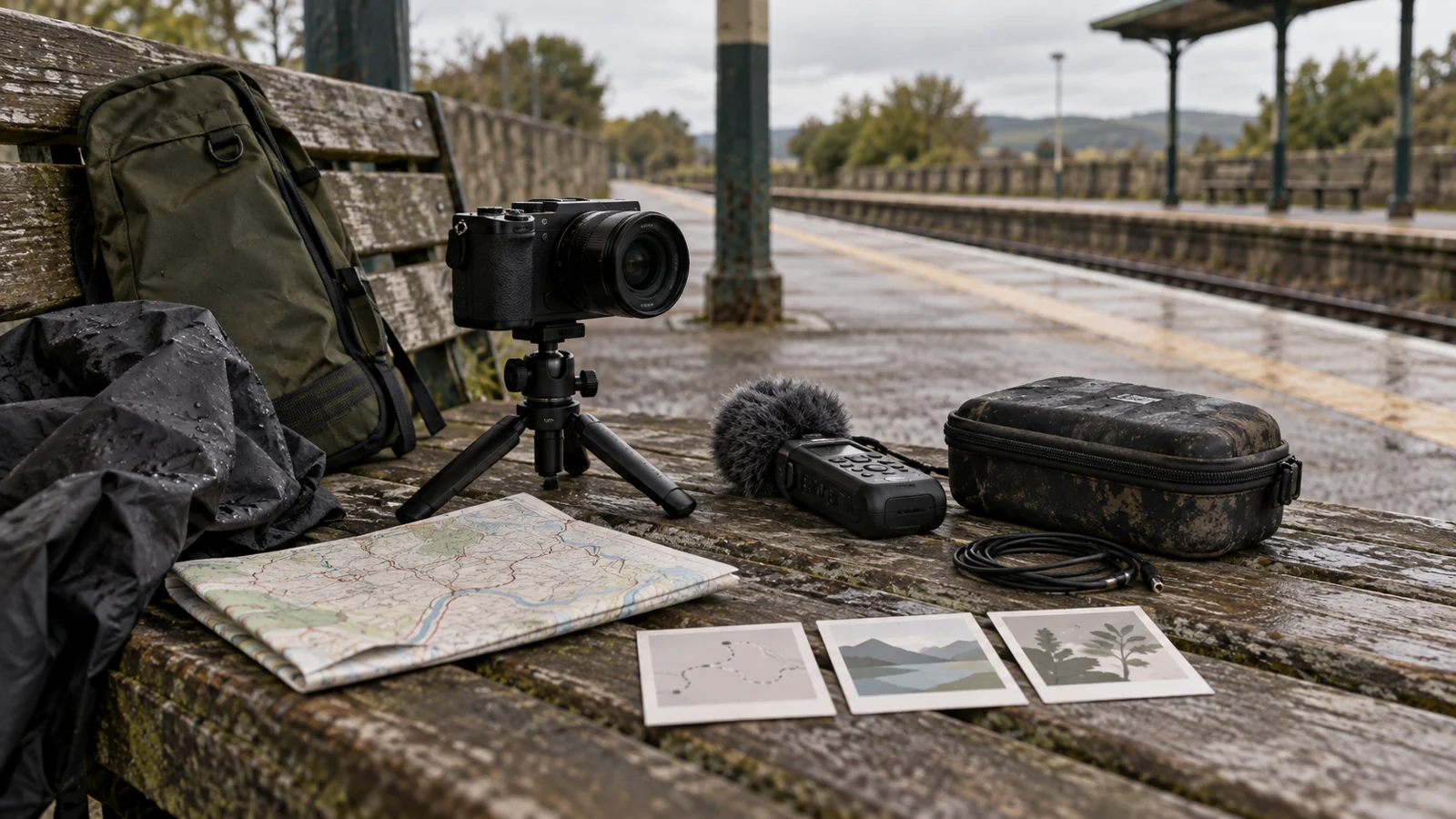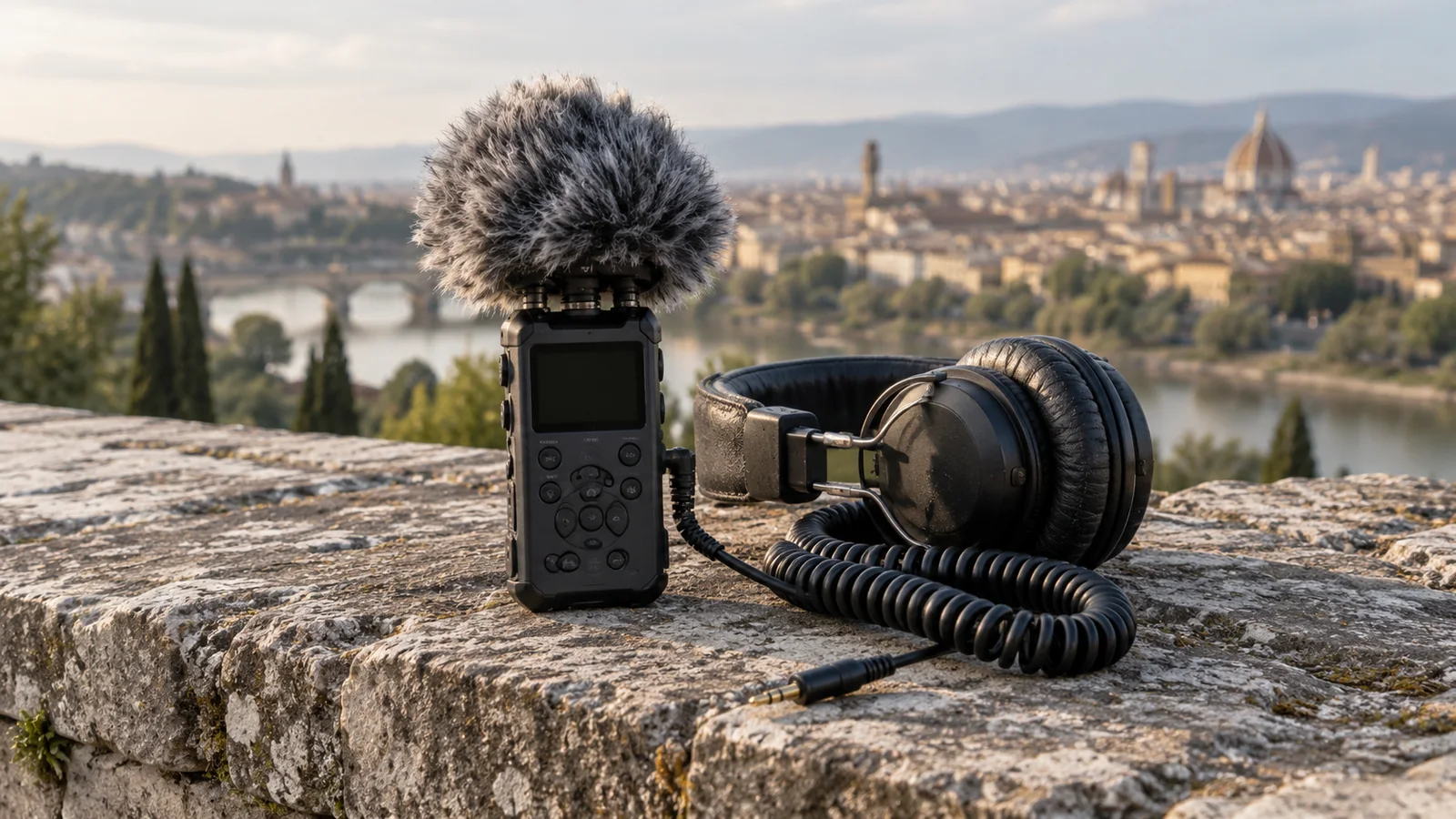
A travel montage can show that a place looked beautiful. A useful travel video helps a specific viewer decide, prepare or navigate. It still has atmosphere, but the attractive shots are connected to evidence: where the experience begins, what access involves, what the creator actually encountered, and which facts may change after filming.
The practical shift is simple: choose one traveler question before the trip and build a proof sequence around it. “A weekend in Lisbon” is a setting. “Can a first-time visitor make this hill route without a car?” is a usable editorial assignment.
Define one decision the video will support
Write a question that includes a person, situation and constraint. Examples include:
- Is this viewpoint practical before an early train?
- What does the walk from the station to the guesthouse actually involve?
- Which parts of this market visit are accessible without climbing steps?
- What should a traveler expect between ticket purchase and boarding?
- Is the advertised “quiet beach” still quiet at the time and season visited?
Do not promise a complete destination guide when you observed one route on one day. State the scope in the opening: date or season, starting point, transport mode, relevant mobility or budget conditions, and whether anything was hosted.
Create a claim ledger before departure
Separate what you intend to verify from what you merely hope to film.
| Planned claim | Best source | On-site evidence | Expiry risk |
|---|---|---|---|
| opening or departure time | official operator or venue | dated sign and actual experience | high |
| route and transfer | official transport map | continuous orientation shots | medium/high |
| price or fee | official current tariff | dated receipt or price board | high |
| physical access | venue accessibility page | entrance, surface, lift or barrier | medium |
| atmosphere | personal observation | ambient sequence at named time | high |
| safety restriction | responsible authority | sign or staffed instruction | high |
Save the URL, access date and a note about what it supports. A search snippet, old blog post or map pin is not sufficient evidence for a current price or restriction. For transport, venue rules, permits and closures, prefer the responsible operator or authority. Recheck volatile facts near publication and add “as observed” language where conditions can differ.
Film a seven-part proof sequence
For every recommendation or warning, capture more than a beauty shot.
1. Orientation
Show where the sequence begins and how the viewer can recognize it: station exit, street name, trailhead, venue entrance or landmark relationship. Record a wide shot, one readable sign and the direction of travel. Avoid revealing a private address or a sensitive location that should not attract unmanaged traffic.
2. Access
Record the actual route, including crossings, stairs, gradients, surfaces, queues, gates and transfers. Do not describe a place as “easy” when you only filmed the destination. Show the part that makes the judgment possible and name whose experience the judgment reflects.
3. Process
Capture the action a traveler must complete: validating a ticket, finding the correct platform, joining a queue, collecting a key or following a marked path. Film the start state, the decision point and the confirmed result. Hide personal data on tickets, passports, booking screens and payment cards.
4. Scale and context
A tight shot can make a room, meal, path or crowd impossible to judge. Pair detail with a stable wide or medium view. Use a familiar reference only when it does not distort the scene. If a lens makes space look unusually large or compressed, avoid claims that the image cannot support.
5. Friction
Record the inconvenient parts: noise, waiting, weather exposure, limited shade, confusing signs, a closed entrance or the walk back. Friction is not negative filler; it is often the evidence that helps someone decide whether the experience fits their needs.
6. Atmosphere
Capture room tone and uninterrupted observations long enough to communicate pace. A fast montage of half-second clips cannot demonstrate that a square felt calm. Name the time, day and event context instead of presenting one quiet minute as the permanent character of a place.
7. Resolution
End the sequence with the answer to the opening question. Show the arrival, completed process or alternative choice, then summarize the conditions under which your conclusion applies.
Keep a field note beside the camera roll
For each useful sequence, record location, local date and time, direction of travel, weather, crowd context, source checked and any uncertainty. Give related clips the same short identifier. A note such as FERRY-A / 14:20 / weekday / ticket office closed, machine working is more valuable in the edit than another unlabeled skyline clip.
Record exact wording from signs rather than paraphrasing from memory. If staff provide information, ask whether it is a current public rule and verify it against an official source when the claim matters. Do not identify an employee as the authority for a policy unless they agreed to be recorded and the organization confirms it.
Edit the answer before the atmosphere
Build a silent factual assembly first:
- state the traveler question and conditions;
- orient the viewer;
- show the process in causal order;
- include the most decision-relevant friction;
- show the result and limitation;
- add atmosphere where it improves place and pacing.
Avoid editing continuity that falsifies the experience. Combining an empty sunrise street, a midday attraction and a sunset restaurant into one seamless “morning route” may look fluid but misrepresent timing and crowd conditions. Transitions should clarify a change of time or place rather than hide it.
Distinguish observation, fact and recommendation
Use language that tells the viewer what kind of statement they are hearing:
- Observation: “At 08:10 on this Tuesday, the queue reached the second gate.”
- Verified fact: “The operator's timetable, checked on the displayed date, lists the first departure at…”
- Personal assessment: “For me, the cobbled climb was the tiring part.”
- Recommendation: “If avoiding stairs is essential, confirm the lift status before leaving.”
Do not convert a personal visit into a universal accessibility or safety guarantee. Conditions, staffing, construction, weather and individual needs change. Link the official source where the format allows and tell viewers when you checked it.
Official travel advisories are inputs, not scenery. Consult the relevant destination authority and your government's current advice during planning, then obey local restrictions and qualified instructions on site. Never stage a road crossing, cliff-edge pose, wildlife approach or restricted-area entry to make the sequence dramatic.
Protect places and people
The U.S. National Park Service's Leave No Trace guidance includes planning ahead, respecting wildlife and leaving what you find. The broader editorial principle travels well: the shot is not permission to damage, disturb or disclose. Follow the actual rules of the location, stay on required surfaces, and do not move natural or cultural objects for a cleaner frame.
Ask identifiable people for appropriate consent when they become subjects rather than incidental background, especially children, workers and people in vulnerable situations. Learn local privacy and filming rules before recording. Blur or omit faces, license plates, booking references and home locations when they do not serve the story.
Be cautious with geotags for fragile, sacred or capacity-limited places. A useful video can explain responsible access without publishing a precise coordinate that the responsible manager asks visitors not to amplify.
Make sponsorship visible inside the story
If accommodation, transport, admission, equipment or another benefit was provided, disclose the relationship where viewers encounter the endorsement. FTC guidance says a material relationship can include free or discounted benefits and recommends disclosures that are hard to miss and part of the endorsement message itself. For video, the agency advises disclosure in the video, not only in its description.
Describe what was provided and what you paid yourself. A hosted stay can still support useful reporting, but the audience needs that context to evaluate the recommendation. Do not claim independence merely because a sponsor did not pre-approve the script.
Plan accessibility while shooting
Narrate important visual information naturally: name the direction, surface, entrance, transfer and result instead of saying only “go this way” or “it looks like this.” W3C guidance notes that planning important visual description into the main audio can reduce the need for a separate description track in instructional material.
Provide accurate captions for speech and meaningful sound. In the accompanying transcript or description, include visual information needed to use the route or process. Keep labels readable against changing backgrounds and long enough to process; a location name flashing for a few frames is decoration, not orientation.
Use an expiry and correction gate
Before publication, recheck every price, timetable, closure, permit, access and safety claim. Add an on-screen or adjacent “checked” date for volatile information. Keep a correction path and preserve the claim ledger so an editor can find the responsible source.
Review again when the operator changes a route, a venue announces construction, a season ends, a sponsor relationship changes or viewers provide credible conflicting evidence. Correct the factual layer without deleting the original date and context.
Release only when a viewer can identify the question, follow the evidence, distinguish observation from current fact, understand important visual and audio information, see material relationships, and find the date and scope. Beauty gives a travel video desire. Evidence gives it lasting use.
Related resources
Sources and scope
- U.S. National Park Service — Leave No Trace Seven Principles — official environmental and safety guidance; accessed 2026-09-15.
- U.S. Department of State — Travel Advisories — official travel-safety resource; accessed 2026-09-15.
- Federal Trade Commission — Disclosures 101 for Social Media Influencers — official advertising guidance; accessed 2026-09-15.
- W3C WAI — Audio Content and Video Content — primary accessibility guidance; accessed 2026-09-15.
- W3C WAI — Description of Visual Information — primary accessibility guidance; accessed 2026-09-15.
The claim ledger, proof sequence and editorial distinctions are Angry Media synthesis. U.S. sources illustrate specific federal guidance; creators must check the responsible authorities and laws for the destination, residence, audience and commercial context. Conditions can change after publication. This article is educational, not legal, accessibility-certification or travel-safety advice. Source review completed 2026-09-15; scheduled publication 2026-11-05.